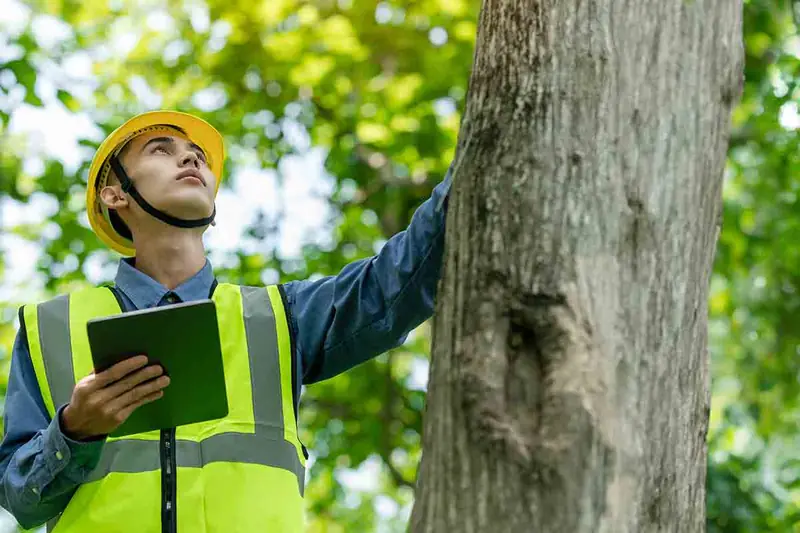
Tree Health Evaluation in Hamilton, ON
Not sure if a tree is safe? Wondering whether it can be saved, or whether it should come down? Our ISA certified arborists conduct comprehensive tree health evaluations that give you clear, honest answers — and a plan.
A health evaluation is the right first step whenever a tree looks different than it did last year, whenever construction or grading has happened nearby, and whenever you are deciding between spending money on care or on removal. Plenty of the trees we assess in Hamilton do not need to come down at all — they need targeted pruning, a change in soil conditions, or simply monitoring. We would rather tell you that than sell you a removal.
What We Assess
- • Structural integrity — lean, root plate, branch unions, trunk damage
- • Disease indicators — cankers, fungal growth, discolouration, dieback
- • Pest damage — emerald ash borer, carpenter ants, bark beetle, borers
- • Root zone — soil compaction, construction damage, grade change
- • Crown health — live crown ratio, deadwood percentage, leaf condition
We also consider the target zone beneath and around the tree. Risk is a combination of how likely a failure is and what it would hit. A hollow trunk in the middle of an open field is a very different situation from the same hollow trunk over a child's bedroom, and our recommendations reflect that.
What You Get
An honest, plain-language assessment of the tree's condition and risk level, with specific recommendations:
- • Treat and monitor
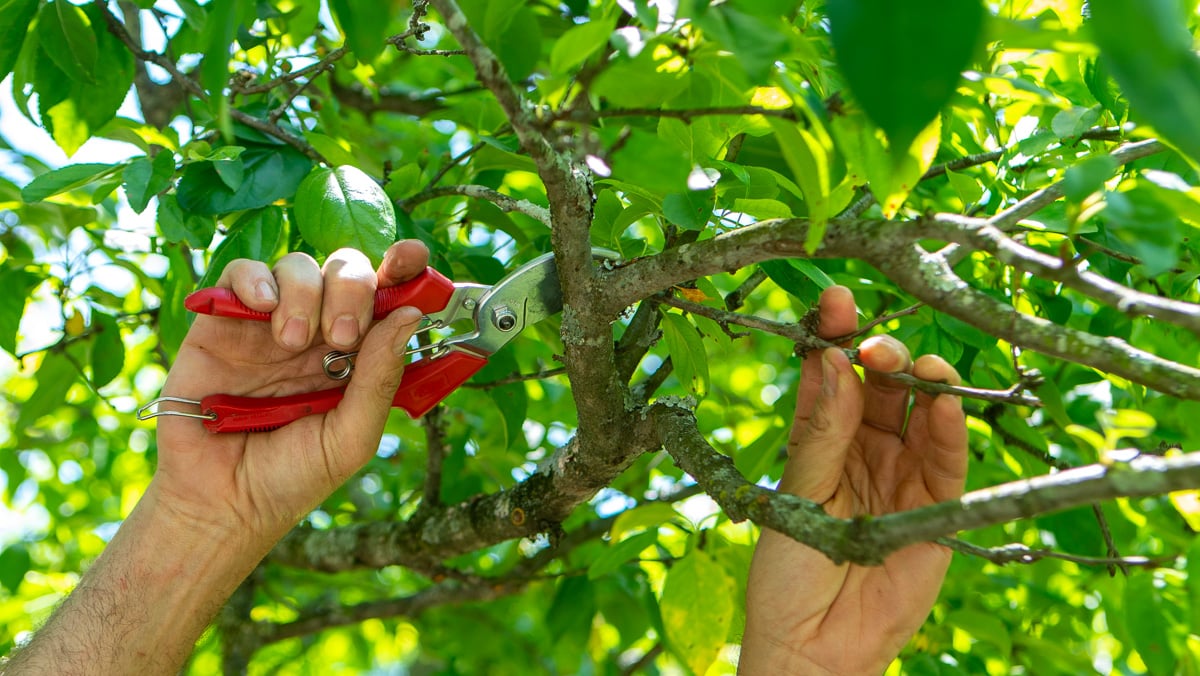
- • Prune and reassess
- • Cable and brace for structural support
- • Remove — and why
Each recommendation comes with a rough timeline and a cost, so you can decide what to do now and what can wait until next season. No jargon, no scare tactics, no pressure.
Our Evaluation Process
Step 1 — Site Visit and History
Jamie walks the property with you and asks what has changed — when the symptoms started, what work has been done nearby, whether there has been grading, trenching, or a new driveway within the root zone. That history usually explains half of what we then see in the tree.
Step 2 — Systematic Inspection
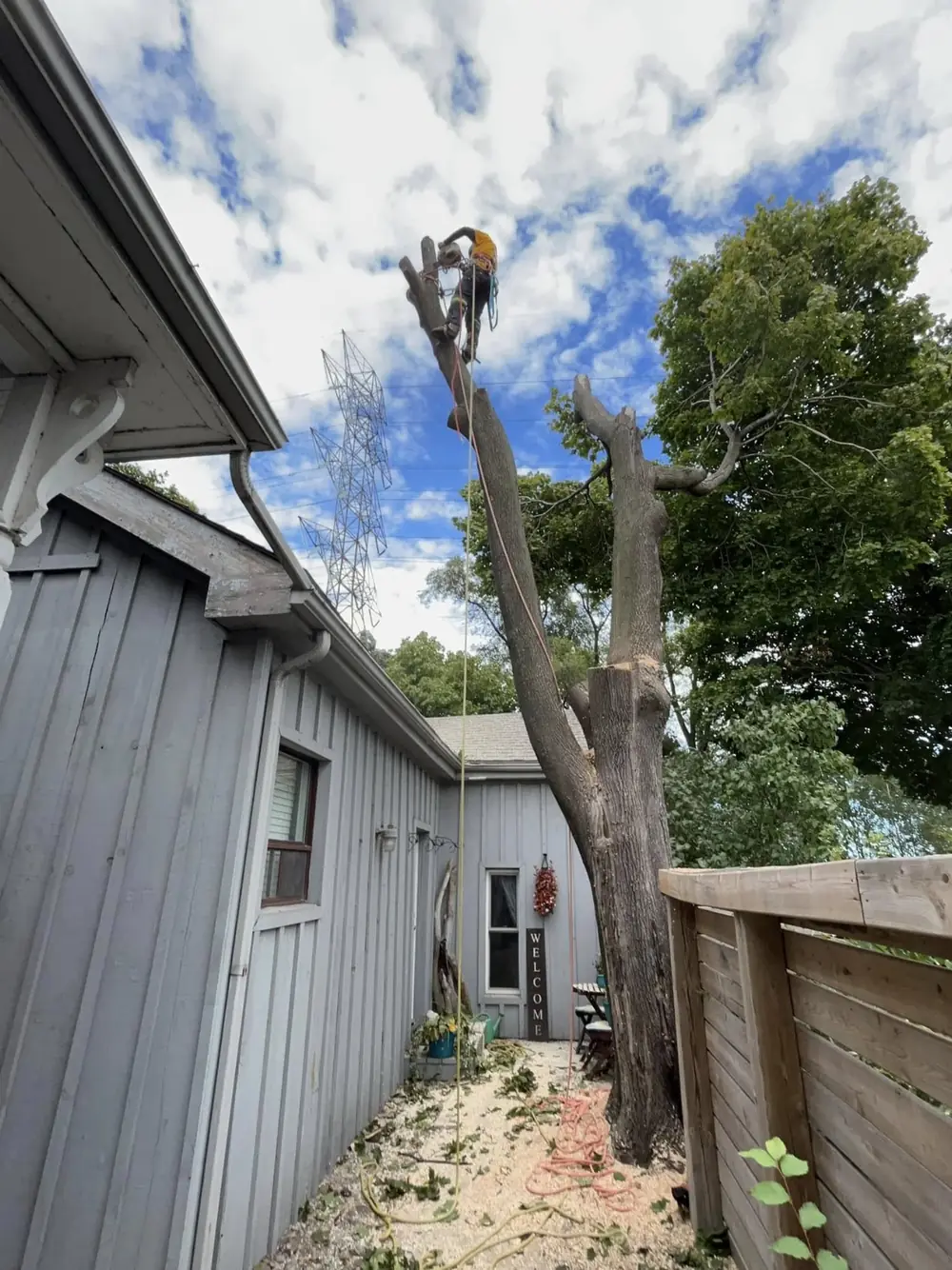
We work from the roots up: root flare and soil condition, trunk and buttress, main unions, then the crown. Where the crown cannot be judged properly from the ground, we climb it. Suspect areas are sounded for hollows and probed where decay is visible.
Step 3 — Findings and Plan
You receive a clear written summary of condition, risk level, and recommended action, with quotes for any work involved. If the answer is "leave it alone and look again in a year," that is what we will tell you.
Emerald Ash Borer in Hamilton
If you have ash trees on your property, an annual health evaluation is strongly recommended. Emerald ash borer (EAB) has been confirmed in Hamilton and surrounding areas. Infected trees decline rapidly and can become hazardous within 2–3 seasons of infestation. Early detection allows for treatment options that are not available once the tree is severely damaged.
The warning signs are specific: thinning that starts at the top of the crown, vertical bark splits, D-shaped exit holes about 3–4 mm across, S-shaped galleries under the bark, sprouting shoots low on the trunk, and heavy woodpecker feeding. Once a tree has lost roughly a third of its canopy, treatment is generally no longer worthwhile. Dead ash also becomes brittle unusually fast, which makes late removals more dangerous and more expensive than removals done early — one more reason to check ash trees every year.
When to Book an Evaluation
- • The tree leafed out late, thin, or not at all
- • A new lean, or soil lifting at the base
- • Mushrooms or brackets at the trunk or root flare
- • Construction, trenching, or grade change nearby
- • You are buying or selling the property
- • You have ash trees — check them annually
What Affects the Cost of an Evaluation?
NUMBER OF TREES
A single tree of concern is quick. A full property inventory with notes on every tree takes considerably longer.
DEPTH OF INSPECTION
A ground-level visual assessment is straightforward. A climbing inspection of the upper crown and unions adds time.
DOCUMENTATION REQUIRED
A conversation and written recommendation is included. Formal reports for a municipality, insurer, or real estate transaction are quoted separately.
ACCESS
Trees on escarpment slopes, in ravines, or behind heavy landscaping take longer to reach and inspect properly.
Our standard on-site assessment for homeowners considering work is free and carries no obligation.
Why Timber Creek
- • ISA Certified arborists on every job
- • Honest recommendations — we say "keep it" when the tree can be kept
- • Zero property damage track record — verified across 120+ five-star reviews
- • Jamie personally attends every estimate
- • Fully insured, WSIB compliant
- • Spotless cleanup — always
Book a free assessment and we will give you a straight answer. If the tree can be saved with pruning, we will prune it. If it cannot, we will explain why and quote removal.